

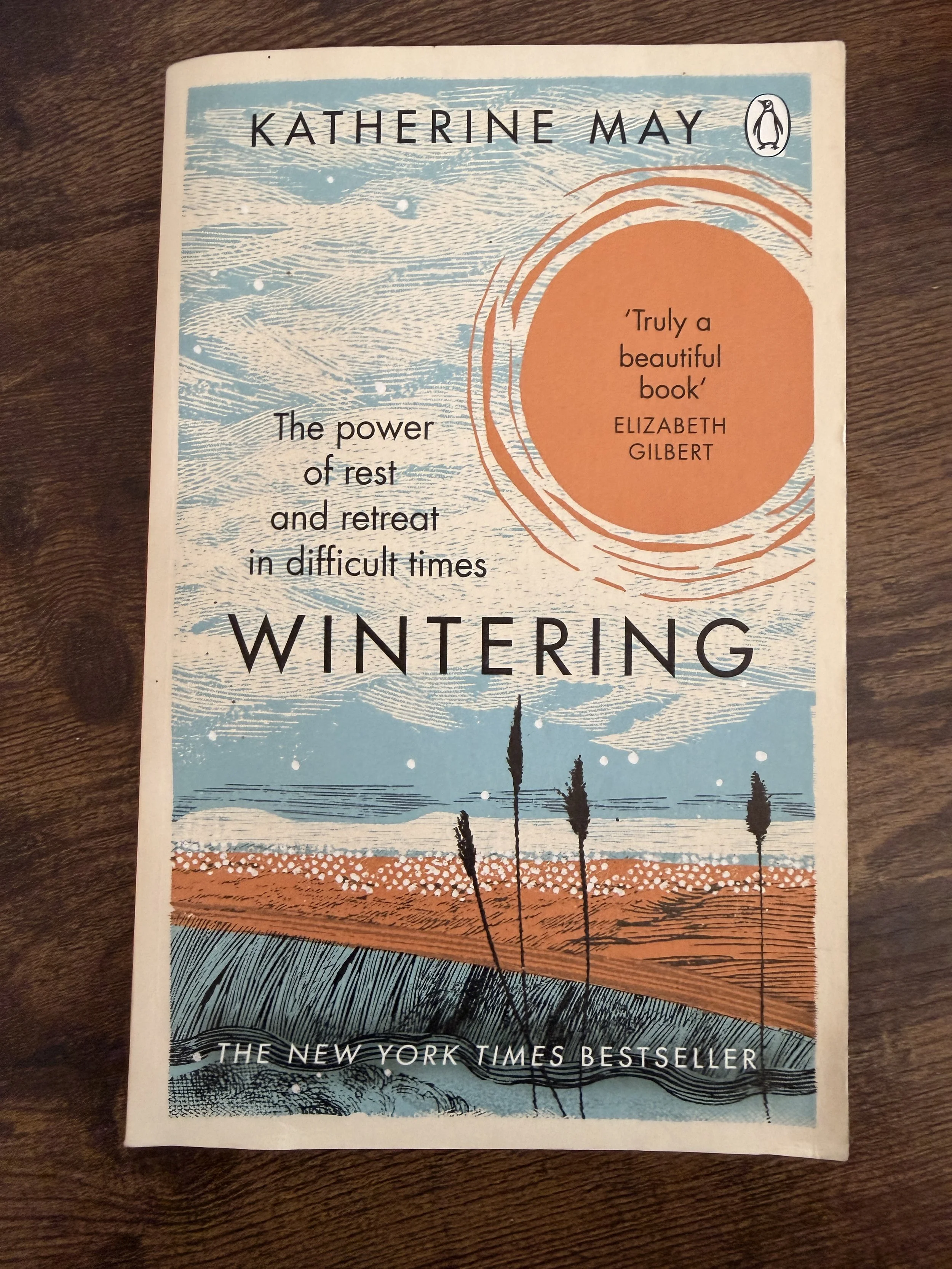
Wintering by Katherine May
Introduction
Some books arrive just when you need them; Wintering was one of those books for me.
Katherine May's beautifully written exploration of difficult seasons in life offers a gentle alternative to the idea that we should always be moving forward, staying productive and getting back to normal.
Instead, she asks us to consider something much more natural: what if some seasons of life are meant to be quieter?
May describes her own experience of an unexpectedly difficult period in her life, when circumstances left her feeling depleted, disconnected and unable to maintain the momentum she had previously taken for granted. Rather than presenting this as something to overcome as quickly as possible, she begins to explore the idea of "wintering" — a period of retreat, rest and restoration.
Whatever it is, the way you tell your story online can make all the difference.
What particularly resonated with me is the way May challenges our relationship with productivity and progress. We often treat difficult periods as interruptions to our "real" lives. We want to get through them, fix ourselves and return to who we were, but maybe the winter changes us, and perhaps it has something to teach us.
Summary
At the heart of Wintering is the idea that life has seasons.
There are periods of growth, energy and expansion, but there are also periods when we need to withdraw, rest and conserve our resources.
May uses winter as both a literal and metaphorical landscape. She explores what happens in nature during the colder months and draws parallels with the times in our own lives when we feel tired, uncertain, lost or simply unable to keep going at the pace we once did.
Wintering might happen because of illness, grief, relationship difficulties, work pressures, ageing or simply because life has become too much, and importantly, it isn't necessarily something we choose.
Sometimes winter arrives and rather than seeing these periods as personal failures, May invites us to see them as part of the natural rhythm of being human.
The book moves between personal experience, observations of nature, history, literature and science, creating a meditation on what it means to step back from the demands of everyday life.
There is no promise that wintering will be comfortable, but a suggestion that it can be meaningful.
The Structure
Wintering isn't a conventional self-help book; May combines memoir with reflections on nature, seasonal rhythms, history, literature and the experiences of others. The result feels more like an invitation to slow down and notice than a list of things we should do to improve ourselves.
That distinction matters because there is no five-step plan for getting through a difficult season.
Instead, May encourages us to pay attention to what our minds and bodies might be telling us.
She writes about the importance of rest, solitude, connection, warmth, ritual and finding small sources of pleasure when life feels difficult.
There is also an important recognition that wintering is not simply about retreating from the world. Sometimes we need other people; we need to ask for help; we need to create a smaller, gentler version of our lives for a while, and sometimes we simply need permission to stop pretending that we are fine.
What Resonated
The idea that stayed with me most strongly was this:
We are not designed to be productive all of the time.
It sounds obvious, and yet how often do we actually live that way?
We measure ourselves by what we accomplish, how much we get done and how well we manage everything that is asked of us, so that even rest can become another task to complete.
We can feel guilty for slowing down.
We can interpret tiredness as weakness.
We can see needing time alone as something that needs explaining.
Wintering made me think differently about this; perhaps there are times when doing less isn't a sign that we are failing, but rather exactly what we need.
I particularly connected with May's idea that wintering can involve a kind of withdrawal from the usual demands of life. There are moments when the answer isn't to push harder but to create enough space to hear ourselves again.
That feels particularly relevant to the work I explore through NeuroSoul Coaching.
When we spend long periods responding to external demands, expectations and responsibilities, it can become difficult to distinguish between what we genuinely need and what we have simply become accustomed to doing.
Sometimes we need stillness before we can hear our own voice.
The Deeper Message
For me, the most powerful message in Wintering is not really about winter; it is about permission.
To slow down.
To acknowledge that something is difficult.
To not have all the answers.
To step away from the expectation that we should always be progressing.
And perhaps most importantly, permission to understand that a difficult season doesn't define the whole of our lives.
We can be wintering without being broken.
That distinction feels particularly important because our culture can be remarkably uncomfortable with vulnerability. We often want to turn difficult experiences into lessons, growth stories and transformations as quickly as possible, but May allows the difficult season to simply be difficult.
There is wisdom in that not every experience needs to be immediately turned into something positive.
Sometimes we need to experience it, rest within it and allow ourselves to slowly emerge when we are ready.
Favourite Ideas
One of the ideas I took most strongly from the book is that wintering is cyclical.
Winter isn't forever. Nature doesn't remain dormant indefinitely. The seasons change, often without us doing anything to make them change.
This offers a reassuring perspective when life feels stuck.
A season of uncertainty isn't necessarily a permanent state.
We don't always need to know when spring will arrive.
We simply need to recognise that winter is a season — not the whole story.
I also appreciated May's exploration of the small things that can sustain us during difficult times.
Warmth.
Food.
Nature.
Books.
Music.
Conversations.
Rituals.
Simple pleasures can seem insignificant when we are used to measuring life through major achievements. But during a wintering season, they can become anchors.
Sometimes wellbeing isn't about making a dramatic change; it is about noticing what makes today feel a little more bearable.
Who This Book Is For
I would recommend Wintering if you:
Are moving through a difficult or uncertain period of life
Feel exhausted by the pressure to keep going
Are experiencing a transition or significant life change
Find yourself questioning your relationship with productivity
Need permission to rest without feeling guilty
Are navigating grief, loss or disappointment
Feel disconnected from yourself
Are beginning to recognise that your life needs a different pace
Enjoy reflective books that blend memoir, nature and philosophy
Want to explore a gentler understanding of resilience
I think it will particularly resonate with anyone who has spent years being capable, responsible and dependable and who has reached a point where simply "pushing through" no longer feels sustainable.
Why I Recommend This Book
I recommend Wintering because it offers a message that many of us desperately need to hear:
You don't have to be thriving all the time.
There will be seasons when we are energetic and creative and full of possibility, and there will be seasons when we need to retreat.
Neither makes us more or less worthy.
May doesn't romanticise difficult periods, and I appreciated that. Wintering can be lonely, uncomfortable and painful. But she reminds us that there can also be value in allowing ourselves to experience these periods without constantly fighting against them.
For me, the book reinforces an important part of learning to trust yourself.
Sometimes self-trust means listening when your body says enough, recognising when you need rest, allowing yourself to change direction, and sometimes it means accepting that you don't have the capacity to do everything you once did.
Key Takeaways
The ideas I took from Wintering are:
Life has seasons, and not all of them are meant for growth and expansion.
Rest is not a reward for productivity; it is part of being human.
Difficult seasons don't mean that something is wrong with us.
We don't always have to push through. Sometimes we need to pause.
Small Small rituals and simple pleasures can provide meaningful support.
Connection matters, especially when we are tempted to withdraw completely.
A period of wintering does not mean winter will last forever.
Sometimes slowing down is how we begin to hear ourselves again.
Perhaps the biggest takeaway for me is that we don't need to be afraid of our winters - they may not be seasons we would choose.
But they are still an important part of life and building resilience through self-compassion.
Next time life feels challenging, rather than asking How quickly can I get through this?, there is another question we could ask:
What might this season be asking me to notice?
That is the question I am taking from Wintering and perhaps it is one worth carrying with us into our own quieter seasons.
This is one of my favourite quotes from the book:
“Winter is asking me to be more careful with my energies and to rest a while until spring.”
I thoroughly recommend this book. If you wish, you can purchase it here: Wintering by Katherine May.
(Affiliate links are for Amazon UK only — if you choose to purchase through them, it costs you nothing extra and helps support NeuroSoul Coaching – with thanks.)